Caliber.
AI-first dealflow management for VCs and PE firms.
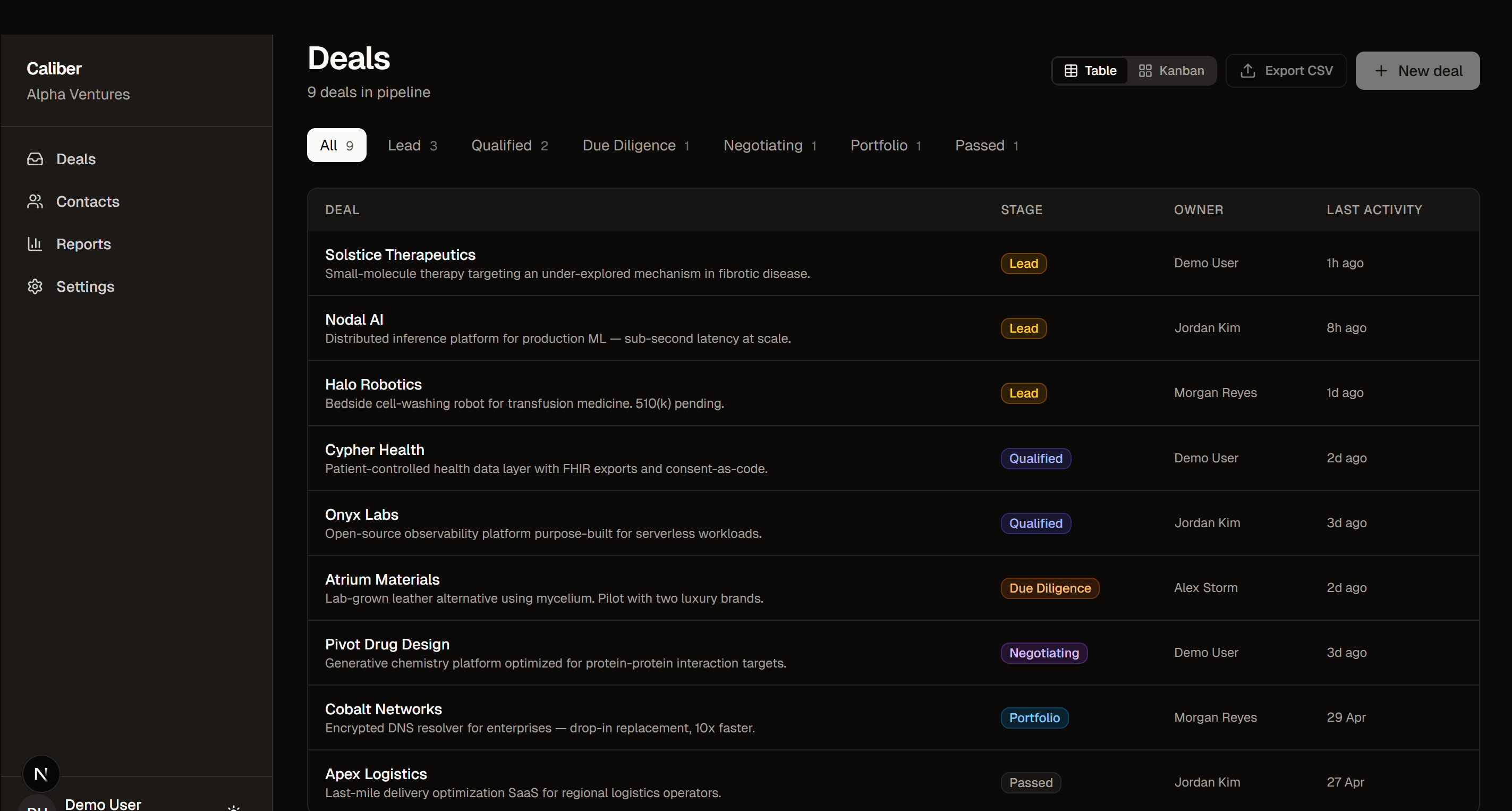
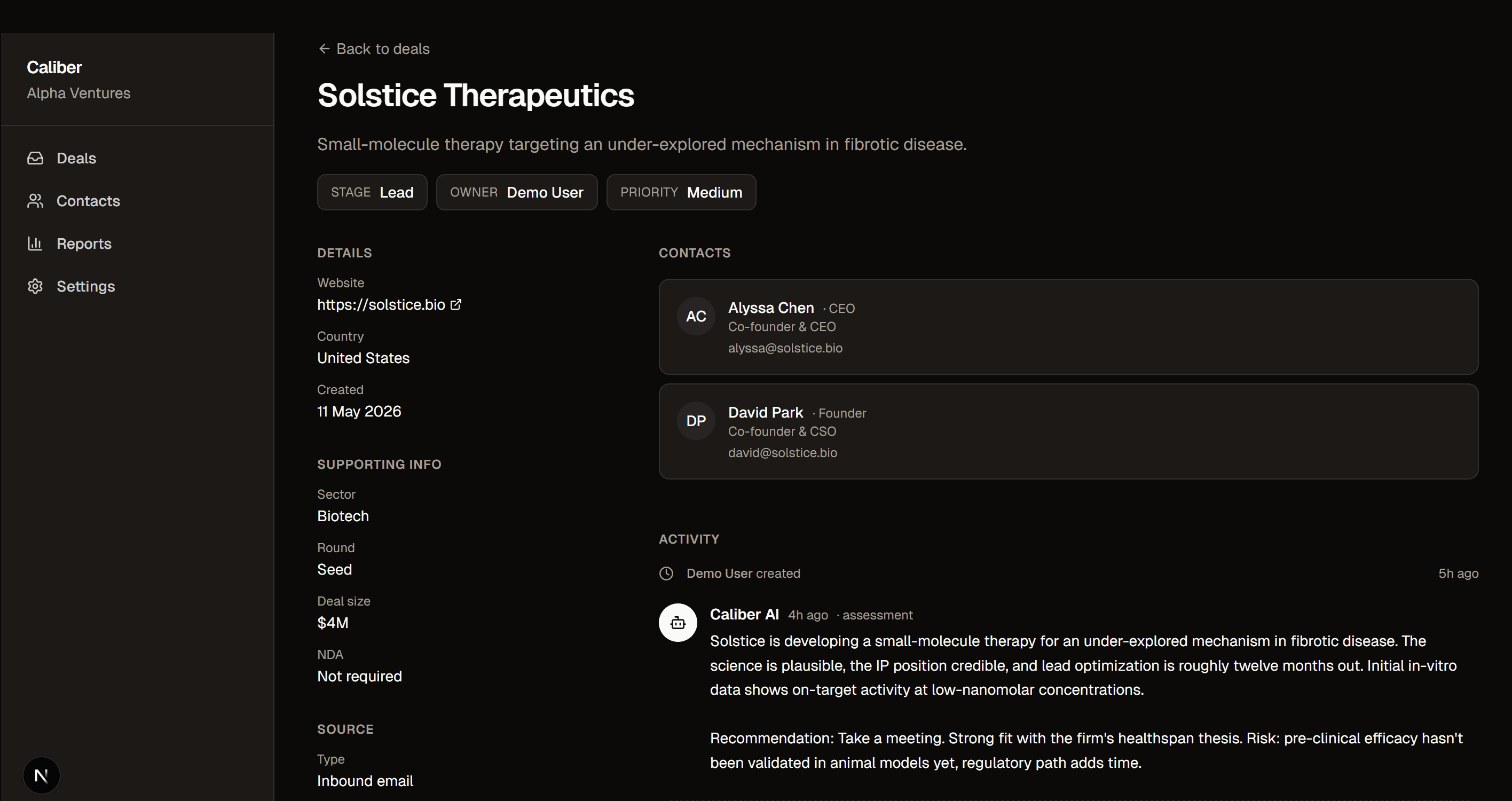
Caliber inverts the standard VC inbound triage workflow. Instead of a junior analyst opening every pitch, reading the deck, and writing a one-pager, the deal lands in the pipeline the moment the email arrives. The first comment is a Claude-generated assessment against the firm's written investment thesis. Humans take it from there.
What it solves.
VC and PE firms still triage inbound deals by hand. A junior analyst opens every pitch, reads the deck, writes a one-pager, and only then does it land in a deal-management tool — often a CRM that was never designed for this work. Multi-tenant SaaS for this niche tends to be either bloated CRMs with relationship graphs and LP modules, or thin spreadsheets. Nothing is built around the actual inbound-to-pipeline flow.
How it's solved.
- 01
Postmark inbound webhook: forward or CC any pitch to the org's address — subject becomes the deal name, attachments go to Supabase Storage with signed-URL access, the email body is archived for audit trail.
- 02
PDF decks passed directly to Claude (no separate text-extraction step) for a two-paragraph assessment against the firm's thesis. cache_control on the system prompt keeps subsequent calls cheap.
- 03
Multi-tenant Postgres with Row-Level Security enforced at the database layer, not in application code — every domain table carries org_id, every query is scoped.
- 04
Bring-your-own-key Anthropic design: users plug their key into /settings/ai. Caliber never sits between users and their token spend — no margin, no rate-limiting, no opaque cost.
- 05
Pipeline stages: Lead → Qualified → Due Diligence → Negotiating → Portfolio (and Passed). Markdown comments per deal, tags, primary owner, team membership.
- 06
Streaming AI chatbot grounded on the org's pipeline — floating widget that talks to the Anthropic SDK directly with the user's BYOK token.
What makes it interesting.
RLS-enforced multi-tenancy
Every domain table carries org_id; Row-Level Security policies enforce isolation in Postgres itself, not in application code. Cross-org misroutes are impossible at the database layer — the engine refuses the query.
PDF decks directly to Claude
No separate text-extraction step. The PDF goes to Claude with the firm's thesis as the cached system prompt, and a structured two-paragraph assessment comes back. One API call, much higher fidelity than text-extraction-first approaches.
BYOK architecture
Users supply their own Anthropic key in settings — Caliber never sits between users and their token spend. No margin layer, no rate-limiting, no opaque cost. The architecture also means the app trivially scales without ballooning provider bills.
Tech.
- Frontend
- Next.js 16TurbopackTypeScriptTailwind v4shadcn/ui
- Backend / DB
- Supabase PostgresRow-Level SecuritySupabase StoragepgvectorServer Actions
- AI
- Anthropic ClaudeBYOKcache_control system promptsStreaming chat
- Email ingestion
- Postmark Inbound webhookAttachment → StorageBody archive
- Auth
- Supabase AuthOrg-based multi-tenantInvite-token redemption
- Hosting
- VercelSupabase Cloud